|
Prosticks Articles
Apple Daily --- 1 Oct, 2000
The Importance of Opening Price
Many investors downplayed the significance of the
opening price. They just pay attention to the closing
price or the day high/low. However, sometimes the opening
price is very important. Sometimes just knowing where the
price opens already enables one to tell where the market
is heading for the rest of the day.
As we have said before, the Active Range is the value
range of the market. It represents the price interval in
which the aggregate market participants have agreed to
trade, under the current economic and political
conditions.
When the market closes below the Active Range, it
signifies that the bears have won the battle. Other things
being equal, the market should open below the Active Range
the next day. However, if surprisingly the market opens
above the Active Range instead, something must have
happened. Some of the fundamentals may have changed and
the public may not know them yet.
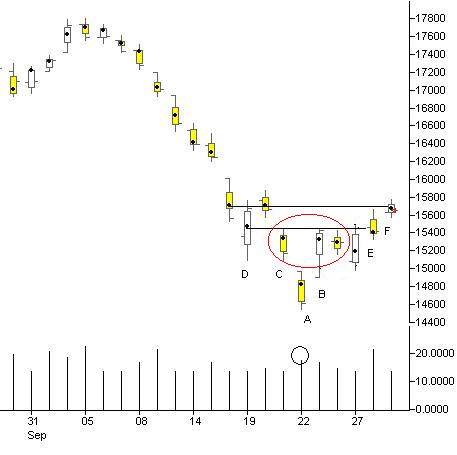
Figure 1 shows the Prosticks chart of Hang Seng Index.
Notice that bar A gapped down and closed near day
low. Furthermore, it closed below the Modal Point and
Active Range, a sign of extreme bearishness. Under this
gloomy situation, the market should open below the Active
Range the next day. Unexpectedly, the market opened just
above the Active Range the next day. If you look at the
previous ten days or so before A, the market never
opened above the Active Range if the previous day was a
falling bar. Thus, the fact that B opened above the
Active Range portended that something was going on.
Desperate buying forces had emerged. As can be seen, bar B
ended up rallying more than 800 points that day. Notice
that the Active Range of bar B is concentrated on
the upper half of the bar, indicating that price rallied
very quickly to high prices and consolidated there.

Take a note at the Modal Count of B. Notice that
though B is a long bearish bar, the Modal Count is
quite large, larger than that of the nearby bars as well
as the 150-day average. That means both buying and selling
forces battled fiercely at the Modal Point. Although in
the end the selling force won, the high Modal Count
signified that buying forces had started to enter the
deeply oversold market.
There are some more interesting points about the Hang
Seng Index chart. Notice that the three Modal Points of
the circled bars occured at the same price, with their
highs being suppressed by the Modal Point of D. The
Modal Point of each E and F are matched by
some previous Modal Points. Also, bar A forms a gap
with both B and C, forming a pattern
resembling the star?pattern in Candlesticks. However, if
you look at the Candlesticks chart (not shown here), A,
B, and C do not form a star pattern.
Last time we discussed about a new type of indicator
called P-RSI which has the same formula as the RSI, but
uses the Modal Point instead of the closing price in the
calculation. In the same way, we can use the Modal Point
instead of the closing price to calculate the Stochastics
also. Let call the indicator P-Stochastics.
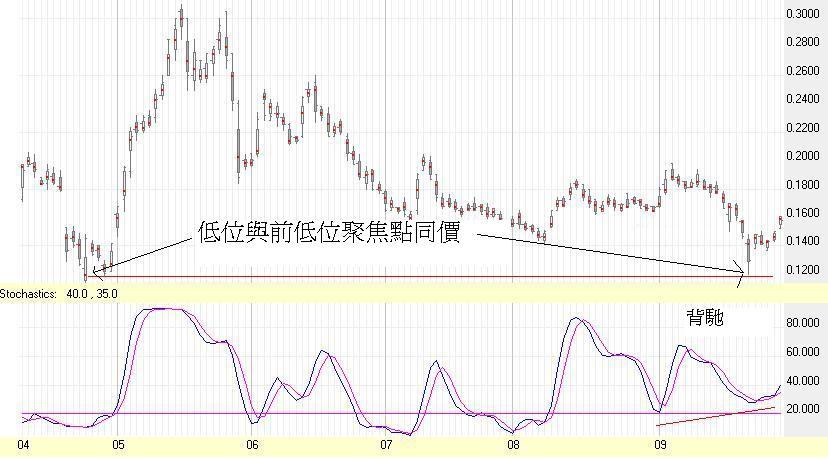
Figure 2 shows the Prosticks chart of Leading Spirit
High-Tech (0606) with the P-Stochastics plotted below. As
can be seen, after a prolonged downtrend, price seemed to
find support at 0.12 (marked A in the figure).
Notice that the low of A is exactly the same price
as the Modal Point of B. Since B was a major
low, naturally its Modal Point was a very strong support
level. Thus, the rebound should be expected when price
approached there. Notice that for bar A, the price
range 0.12-0.13 is not covered by the Active Range,
showing that when price falls in this range, buying forces
from B flushed in and desperately pushed price
upwards, with little volume changing hands.

Next, consider the P-Stochastics plot. As can be seen,
the P-Stochastics exhibits a conspicuous divergence at A.
Price forms a new low at A but the P-Stochastics
does not. On the other hand, if you look at the
traditional Stochastics plot (not shown here), no
divergence can be detected.
|