|
Prosticks Articles
Hong Kong Economic Journal --- 13 Nov, 2000
ProSticks Patterns Versus Candlesticks Patterns
Traditional Candlesticks emphasize pattern recognition.
Their techniques are based on the relative positions of
the open, high, low, and close prices. The distance
between the open and close price is called the body and is
represented by a rectangle. The two lines joining the
bodies are called shadows.
Candlesticks followers believe that if the combination
of bodies and shadows form certain patterns, that
foretells a market top or bottom.
For example, a very famous Candlestick reversal pattern
is called the hammer. The prevailing trend is downwards.
Then, on a day, the market opens and tumbles, further
perpetuating the downtrend. However, after sinking to a
20-day low (or lower), price suddenly reverses its course
and rallies all the way upward, closing near day high.
This is a very bullish pattern and often signifies the
beginning of a pending uptrend.
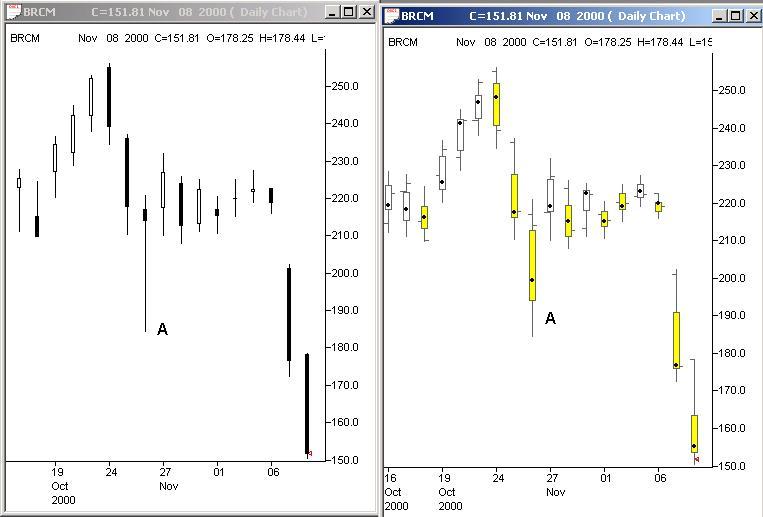
Figure 1 shows both the Candlesticks chart (left) and
the Prosticks chart (right) of Broadcom (Symbol:BRCM).
Broadcom is a leading broadband provider in US and is
listed in Nasdaq with market capitalization over US$36
billion.

According to the Candlestick chart, bar A is a
hammer pattern. Notice that a short body and a long lower
shadow characterize a hammer pattern. As can be seen,
though the hammer pattern appeared, price did not rise.
Instead, it only consolidated for a few days and then
continued to tumble. Bar A is a false signal.
Take a look at the corresponding Prosticks chart.
Notice that according to Prosticks, bar A is not a
hammer. The short body and long shadow combination is
absent. The Active Range is long and falling,
demonstrating non-resilient selling pressure.
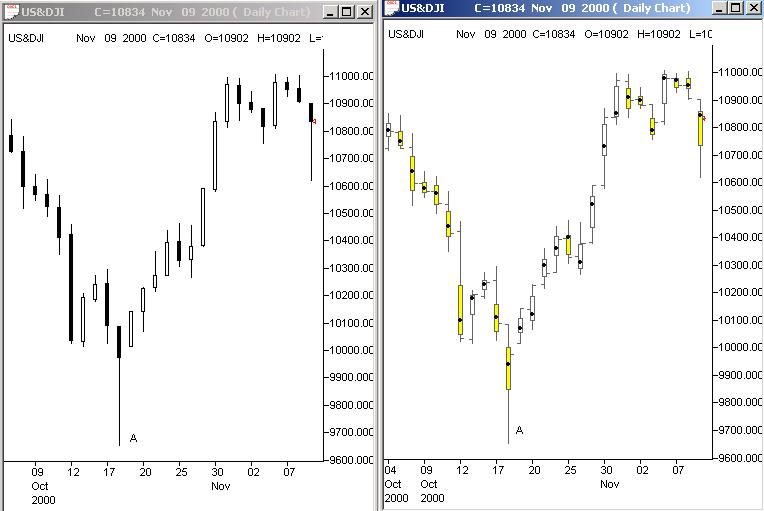
Figure 2 shows the Candlesticks and Prosticks chart of
Dow Jones Industrial Average. Notice that for bar A,
both the Candlestick and Prosticks exhibits a hammer
pattern. The market keeps rising and rising.

To conclude, when an investor detects a Candlestick
pattern in a chart, it is better to consult the Prosticks
chart to see whether the corresponding Prosticks pattern
also demonstrates the same bullishness or bearishness.
This way, many false signals can be avoided.
|